

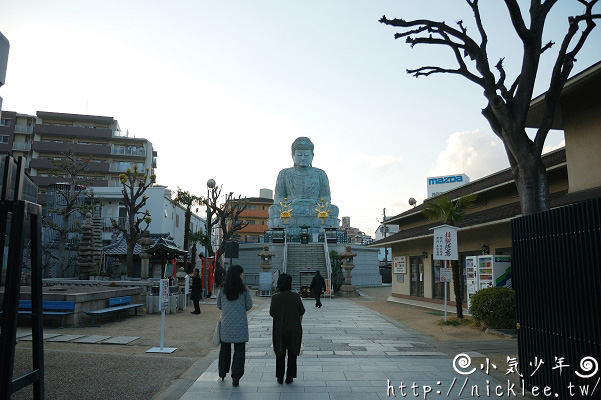
If you have already seen the Great Buddha of Nara’s Todai-ji Temple, then you might not be interested in this Hyogo Great Buddha. Well…yes, if I say this is the Hyogo Great Buddha, would anyone believe it? This is a statue of Taira no Kiyomori, but it lacks the solemn and dignified feeling and instead has a touch of amusement. This statue of Taira no Kiyomori is located on the way from the subway station to the direction of the Great Buddha in Shinkawa Canal. Along the way, you will pass by…
Category: Japan
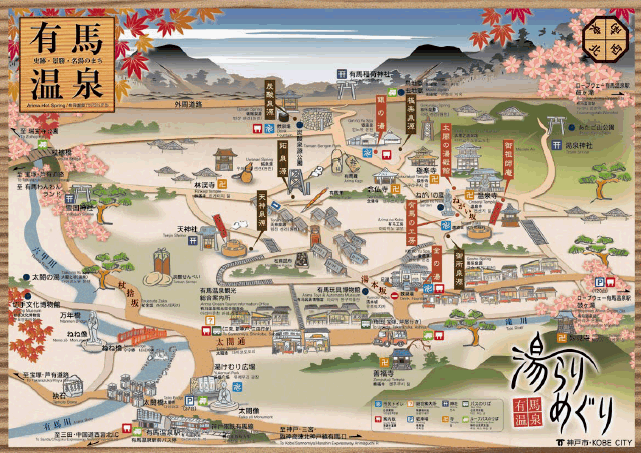
Kobe Attractions – Strolling in Arima Onsen
The Arima Onsen area is quite suitable for taking a leisurely stroll. When I came during the maple season before, I was in a rush and could only take a quick look. This time, I have more time to explore deeper.
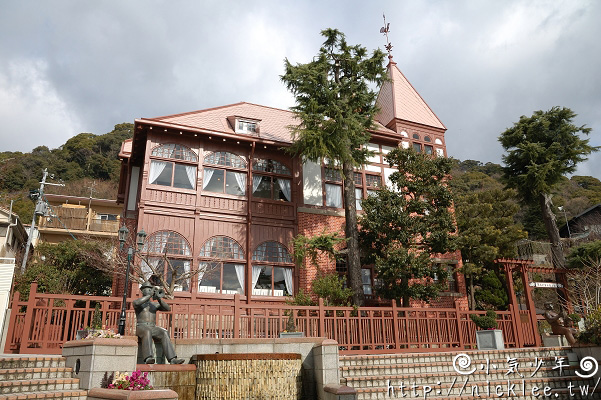
Kobe Attractions – The Weathercock House of Kitano Ijinkan (Former Foreign Residences)
The Kobe Kitano area used to have many foreigners living here, so it has preserved some old houses with European and American styles. That’s why the foreigner houses in this area are also called Kitano Ijinkan. “Ijinkan” refers to foreigners in this area. The most common ones are the Moegi House and the Weathercock House. The Weathercock House was built by Mr. G. Thomas, a German businessman who used to live in Kobe. It is the only building with brick walls, and the wind vane on the spire is a familiar feature. It has now become an indispensable symbolic landmark of Kitano-cho.
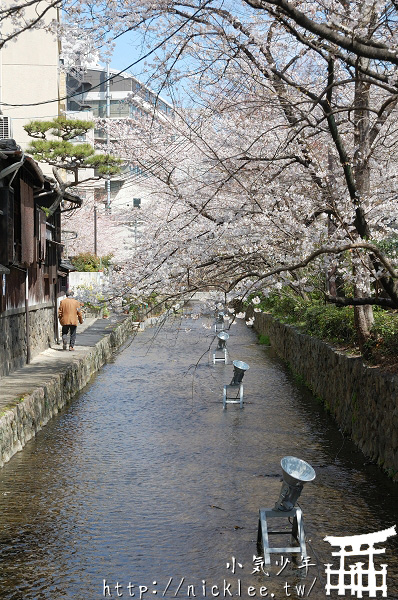
Kyoto-Weather Kyoto-Street-Scenery Kamogawa Takasegawa Shirakawa-Tsuribashi
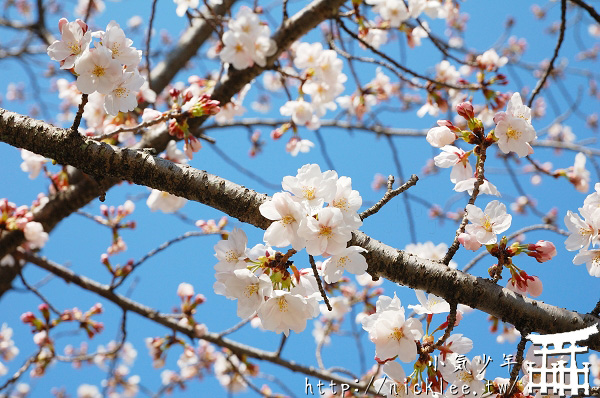
During the cherry blossom season in Kyoto, besides visiting famous cherry blossom spots, I personally enjoy taking walks on the lesser-known streets of Kyoto. One of my favorite spots is the area near the Takase River, which runs parallel to the Kamo-gawa.
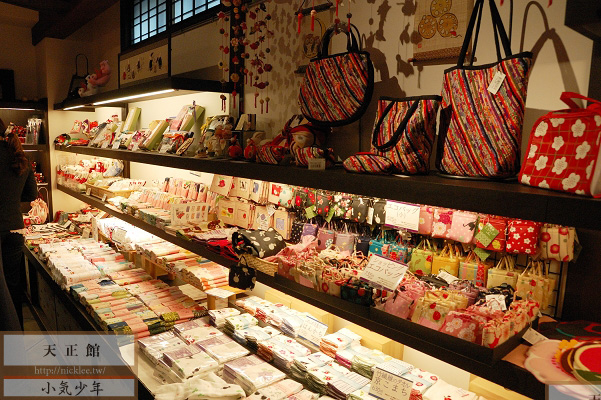
Kyoto Japanese groceries Store – Kurochiku Tenshokan
There are many shops in Kyoto that sell Japanese groceries, dolls, and artworks. One of the shops I spent the most time exploring is Kurochiku Tenshokan (Japanese: くろちく天正館), located near the Kyoto Municipal Subway – Shijo Station or Hankyu Railway – Karasuma Station.
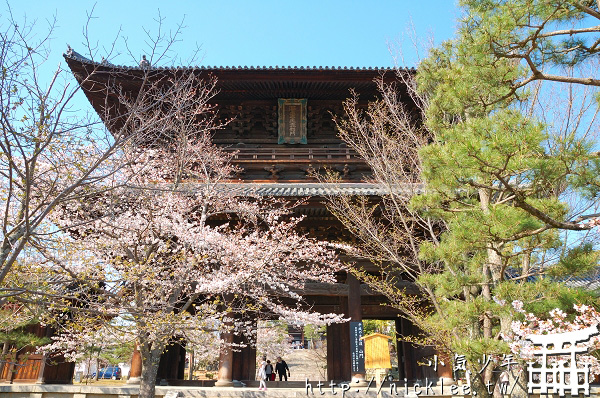
The Birthplace of the Shinsengumi – Kurotani Konkai-Komyoji Temple
Kurotani Konkai-Komyoji Temple, also known as the source of Mount Hiei, is a sacred Buddhist site in Japan’s modern history. It has gained some fame, for example, as the place of offering for NHK’s historical drama “Jiang (Princesses of the Warring States)”. In addition, it served as a stronghold for the Aizu Clan (Tokugawa camp) during the end of the Edo period and was the birthplace of the rise of the Shinsengumi. Therefore, it is an important historical landmark.
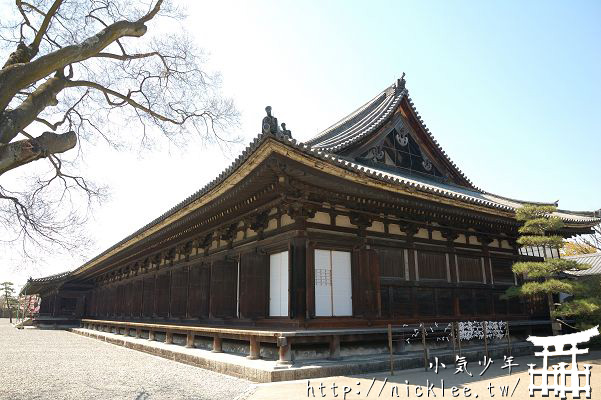
Sanjusangendo with a Thousand Kannon Statues
Sanjusangendo is probably the most challenging and yet rewarding travel article I have ever written. It’s challenging because photography is prohibited inside the temple, so I didn’t have many photos to use. However, it’s also rewarding because I was able to capture some shots from the outside…XD Anyway, before entering Sanjusangendo, I recommend reading the manga “Acala, the Immovable King” (rated R) and “”Peacock King””. Why? Because the deities and monsters inside the temple are depicted in these manga.
Birthplace of the Shinsengumi – Kurodani, Konkai-Komyoji Temple
Kurodani, Konkai-Komyoji Temple, originating from Mount Hiei.
Although it is a sacred Buddhist site, it also holds a notable place in modern Japanese history…
For instance, it is featured in the NHK Taiga drama “Gō: Hime-tachi no Sengoku” as a memorial site
Additionally, it served as the base for the Aizu Domain (Tokugawa faction) during the late Edo period, and the birthplace of the Shinsengumi.
Thus, it is an important historical site.
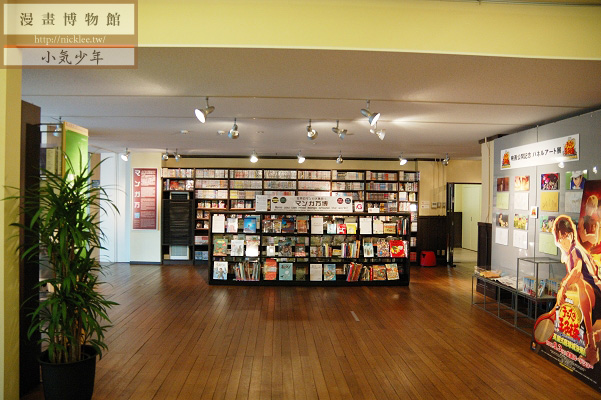
Kyoto International Manga Museum
I remember when I was a child, from Doraemon, Dragon Ball, YuYu Hakusho, Slam Dunk to the current Naruto, One Piece, it can be said that it is the generation of manga. Strictly speaking, without manga, there would be no nicklee, huh? The Kyoto Manga Museum is located in the city center of Kyoto, inside this building. However, the front is a restaurant and the back is the museum.
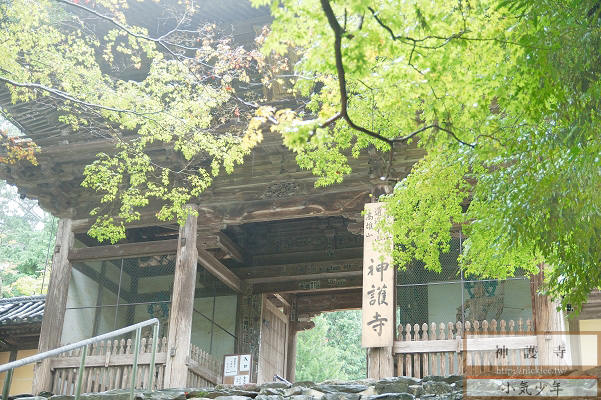
Kyoto Summer – Jingo-ji Temple
Jingo-ji Temple is a renowned spot for maple viewing in the Takao area. Although it is not listed as a World Cultural Heritage site, it has a relatively high reputation. However, in September, you won’t be able to see a full blanket of red maple leaves. Even in the mountainous city of Takao, it’s the same.